What Should You Do With Your Personal Belongings During a Home Swap?
Do you need to empty your wardrobes, clear every kitchen cupboard, and hide all signs that you live there? Not at all. Here is how to make space for your home swap guests without turning your home into an Airbnb.
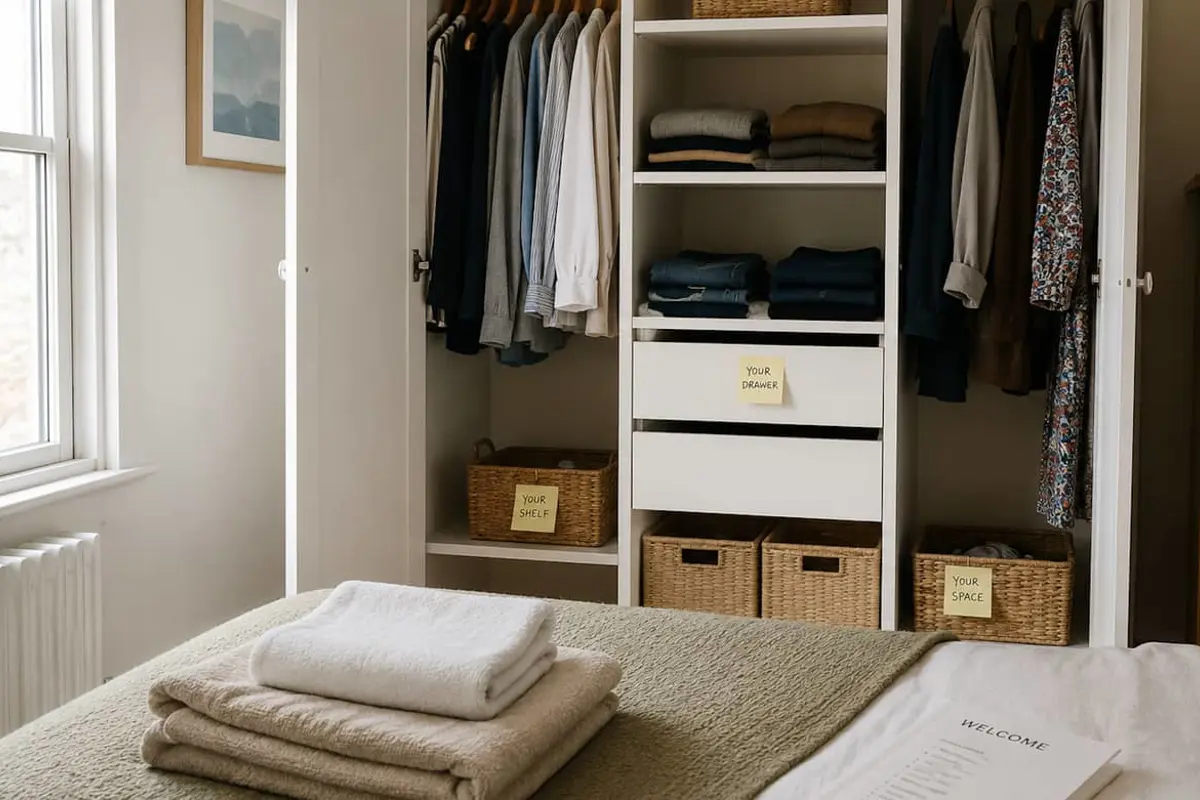

One of the first questions people ask when preparing for a home swap is: What am I supposed to do with all my stuff? The thought of packing away your clothes, emptying every cupboard, and removing everything personal can make home swapping sound like a huge amount of work.
The short answer: No, you don't need to empty your home before a home swap. Most experienced home swappers simply tidy up, make some storage space for their guests, and put away anything particularly valuable or sentimental. Everything else usually stays exactly where it is.
Unlike a holiday rental, a home swap is about sharing a real home. Your guests expect a lived-in space, not an empty one. You only need to create enough space for them to settle in comfortably, put away the few things you would rather keep private, and clearly explain what they can use. For more practical ideas, read these tips for preparing for a smooth home swap from Nikola, a home swapper on Swaphouse.
You Don't Need to Empty Your House
Your books can stay on the shelves. Your clothes can stay in the wardrobe. Family photos, decorations, games, and the things that give your home its personality do not need to disappear.
In fact, staying in a home that feels like a home is one of the nicest parts of a home swap. Guests get a much more personal and comfortable experience than they would in an empty holiday rental. The goal is not to remove every trace of yourself. It is simply to make your home feel clean, welcoming, and easy to use.
Declutter and Make Space for Your Guests
Guests do not need an entirely empty home, but they do need somewhere to put their own things. Before the swap, tidy the main surfaces and create a few clearly available storage spaces.
- Empty part of a wardrobe, such as one half or one section
- Leave a few drawers or shelves free
- Clear some bathroom storage for toiletries
- Make room in the fridge for groceries
- Leave enough clothes hangers in the guest section of the wardrobe
- Show guests where they can store their suitcases after unpacking
You can group your own belongings on one side of a wardrobe or in specific drawers. This is much easier than packing everything away, and it makes the guest space immediately clear.
Clean the Kitchen, but Don't Empty It
Of course, you should give the kitchen a proper clean before your guests arrive. Wipe down the surfaces and appliances, wash anything left in the sink, and remove expired or spoiled food. However, there is usually no reason to empty your kitchen cupboards. Cookware, plates, glasses, utensils, and pantry items can stay where they are. Part of the convenience of staying in a real home is having a properly equipped kitchen from day one.
The same applies to food. You can leave unopened or usable food in the fridge if you are happy for your guests to use it. Everyday basics such as olive oil, salt and pepper, herbs, coffee, and tea are especially useful because they are inconvenient to buy for a short stay.
There is no single rule for what guests should be allowed to use. Some swappers say, "Help yourself to anything that is already open." Others prefer, "Please use basic pantry items, but leave the rest." Both approaches are completely fine. Just remove anything that will expire while you are away and explain your expectations beforehand.
Put Away Anything Valuable or Very Personal
Home swapping is built on mutual trust, and your guests are trusting you with their home at the same time. Still, putting away certain belongings can give you extra peace of mind and prevents them from feeling responsible for those items. If this is something you are concerned about, read more about safety and trust in home swapping.
Think about passports, important documents, jewellery, cash, expensive small items, medication, or sentimental keepsakes. Store them in a locked cupboard, safe, or private room, or leave them with someone you trust. This is not because you expect anything to go wrong. It simply means you can relax during the swap without thinking about them.
A Small Trick We Use: Sticky Notes
One small thing we like to do when we swap homes is leave a few sticky notes around the house. We use them to show which drawers and cupboards we have cleared for our guests, which shelf in the fridge they can use, and where they can find household supplies. It takes us only a few minutes and saves our guests from having to guess or ask.
We also use a note if there is a private cupboard or space we would prefer them not to use. We repeat the same information in our welcome guide and briefly walk through it during a video call before the swap. In our experience, this kind of simple communication is much more useful than moving half of the house into storage.
Keep Guest Bed Linen, Towels, and Spare Pillows Ready
We like to keep a separate set of sheets, duvet covers, and towels specifically for guests. It makes preparing for each swap much easier and ensures everything feels clean and fresh when they arrive.
💡 Small tip from experience: If you're travelling by car, consider bringing your own pillow. Many people sleep best on the pillow they're used to. If your guests are flying, having one or two spare pillows available is a thoughtful touch.
Leave the Everyday Essentials
Your guests should not have to buy an entire pack of every household product as soon as they arrive. Leave enough basics to get them started, such as:
- Hand soap and toilet paper
- Washing-up liquid and dishwasher tablets
- Bin bags and cleaning products
- Laundry detergent, if they are welcome to use the washing machine
These are normal consumables in a lived-in home. Let your guests know what they can use and whether you would like anything replaced if they finish it.
Make the Practical Things Easy to Find
A comfortable stay is not only about storage space. A few practical preparations can prevent a lot of questions after your guests arrive:
- Keys and access: Explain where spare keys are, which entrances to use, whether the garage, bike shed, or storage room is available, and what to do if they lock themselves out.
- Appliances: Leave a short instruction card or manual link for an unusual oven, induction hob, coffee machine, heating system, or washing machine.
- Wi-Fi and workspace: Share the Wi-Fi password, point out the best place to work, and leave an extension lead or spare charging cable if you have one available.
- Plants: Explain which plants need water and which do not. If a neighbour will take care of them, let your guests know they do not need to worry.
Think About Who Is Staying in Your Home
A little personal preparation goes a long way. If a family is staying, let them know which toys their children can use and put away anything fragile in the children's room. If your guests are working remotely, make sure the workspace is reasonably clear. If they are staying for several weeks, give them a little more wardrobe, bathroom, and fridge space than you would for a weekend.
If pets are part of the exchange, leave their food, leads, toys, and care instructions somewhere easy to find. Our home swap with pets checklist covers the details. You do not need to predict every possible need. Simply think about how your guests will use the home each day and remove any obvious friction.
Talk About It Before Your Swap
The easiest way to avoid uncertainty is to talk everything through before the swap. A successful home swap conversation helps everyone agree on expectations. During your video call, explain:
- Which wardrobes, drawers, and other spaces are available
- Whether anything is private, locked, or off-limits
- What food and household products they can use
- Where to find keys, linen, towels, and practical instructions
- Anything else that will help them feel at home from day one
This does not need to be a formal inspection or a long list of house rules. A friendly walkthrough and a simple welcome guide are usually enough. Clear communication also matters if plans unexpectedly change, which we explain in our guide to home swap cancellations.
Use the "Friend Test"
If you are unsure how much preparation is enough, imagine that a good friend is staying in your home for a week. You would tidy up, make room for their clothes, leave clean sheets and towels, and explain how things work. You would not empty your entire house or remove everything that makes it yours.
Not a hotel guest. Not a stranger. Just someone you trust and want to have a comfortable stay. That mindset perfectly captures home swapping.
Frequently Asked Questions
Should I remove all my clothes before a home swap?
No. Most home swappers leave their clothes in place and clear one section of a wardrobe or a few drawers for their guests. Grouping your own clothes together makes it obvious which space is available.
Is it okay to leave food in the fridge?
Yes. Remove anything spoiled or likely to expire, then tell your guests what they are welcome to use. Many home swappers leave everyday basics and any usable food they do not mind sharing.
Can I lock a room during a home exchange?
Yes, as long as you make this clear before confirming the swap. A locked room, cupboard, or storage area can be a convenient place for valuables and private belongings.
Should I leave towels and bed linen?
Usually, yes. Clean bed linen and towels make travelling easier for your guests, especially if they are flying. Discuss this beforehand so everyone knows what will be provided.
Do guests usually bring their own pillows?
Some guests travelling by car prefer to bring their own pillow. Guests who fly usually use the pillows provided in the home, so it is thoughtful to have one or two spares available.
A Little Preparation Goes a Long Way
Home swapping works because trust and respect go both ways. Your guests are opening their home, cupboards, and everyday life to you at the same time. They will most likely treat your home the same way they hope you will treat theirs.
At the end of the day, preparing your home for a swap isn't about hiding every personal item. It's about making your guests feel comfortable while giving yourself peace of mind. A tidy home, a bit of storage space, clear communication, and a few thoughtful touches go a long way.
About Swaphouse
Imagine if you could work remotely from a destination of your choice, for free, without having to pay any accommodation costs. At Swaphouse, we believe this is the future of work, and it's our mission to make it an accessible reality for every remote worker.





Community Comments
Join the Conversation
Sign in to share your tips and experiences with the community